




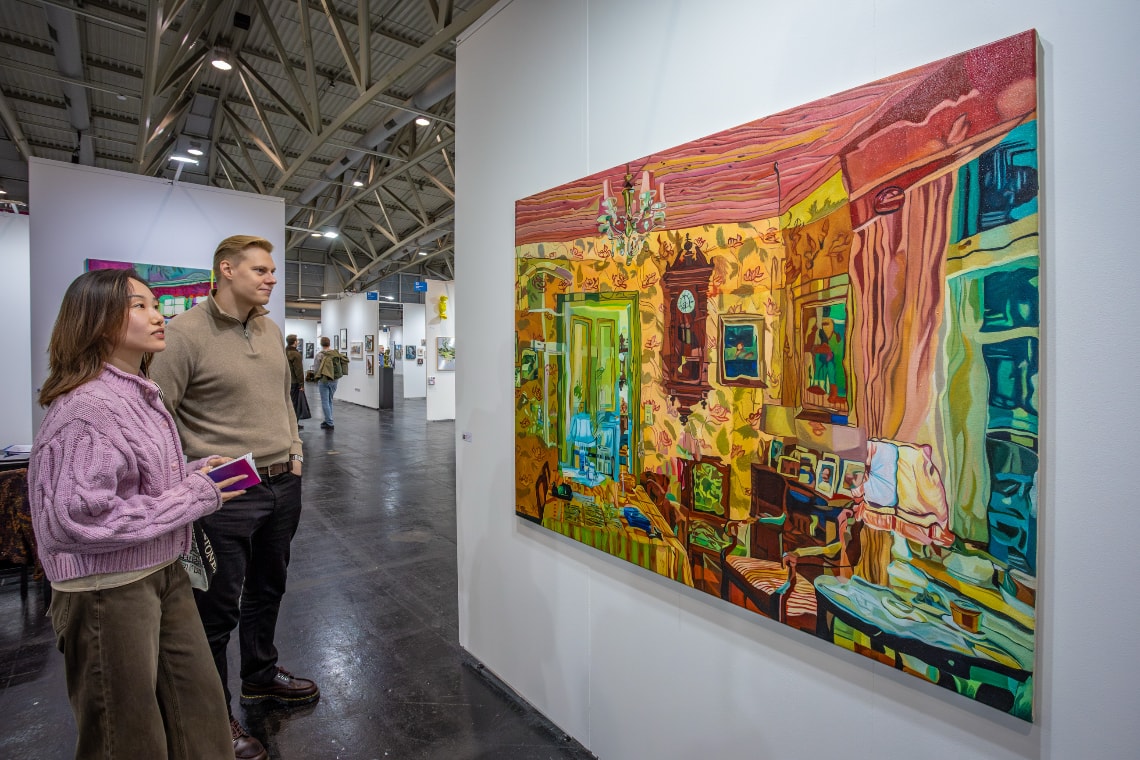
If you want to know where art is heading, skip the manifestos and walk a fair. Group commercial exhibitions are where art meets the people who make a living from it, and where buyers vote with their wallets. They show what is in demand and what isn’t, what is museum or private-collection quality, and, perhaps most honestly, where the public spirit sits.
Over the past two or three years, that spirit has shifted, and in 2026 the result is hard to miss: contemporary figurative art is having its commercial moment. Figuration never left, but it has rarely owned the room the way it does now.
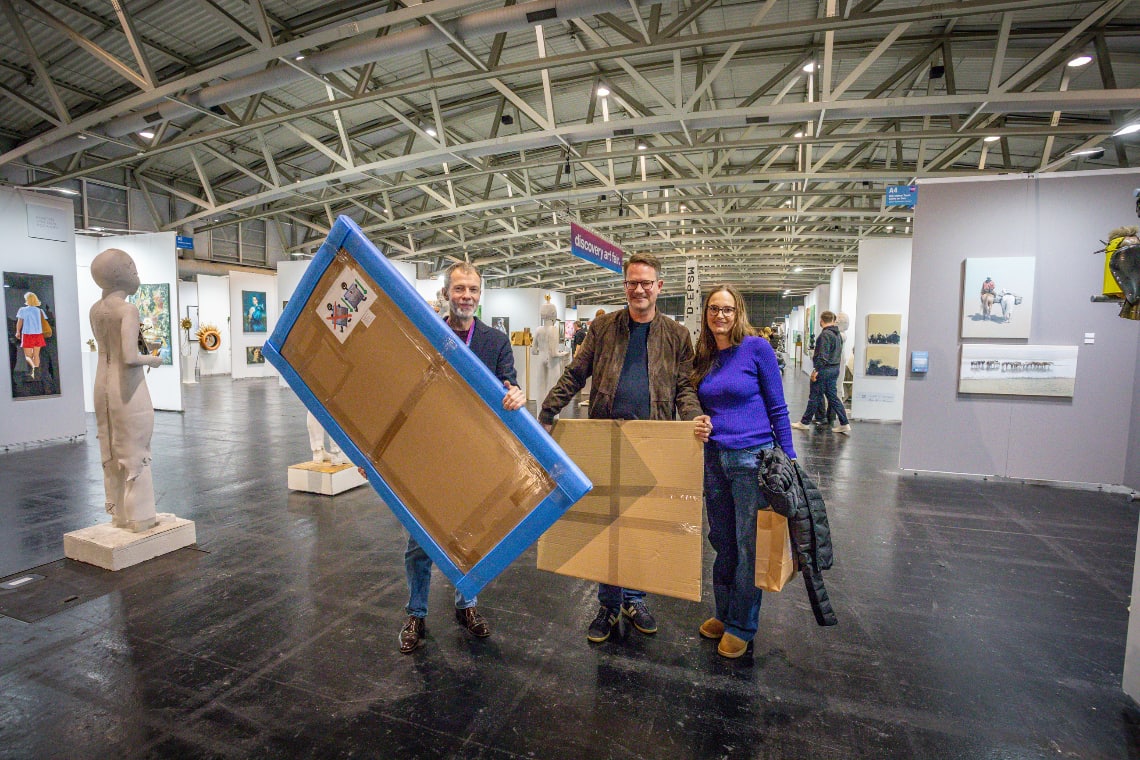
Collectors at DAF Frankfurt 2026
Why Figurative Art is Dominating in 2026
It arrives from every direction. Some painters borrow from Impressionism, Expressionism or Neue Sachlichkeit; others take the figure apart entirely. A strong contingent works in hyperrealism or in a dreamlike, oneiric realism that stops just short of Surrealism. The subjects range just as widely, from the intimate to the political, the socially engaged and the outright pop. What unites them is that you recognise what you’re looking at.
DAF curator Barbara Fragogna points to the sheer presence of hyperrealism: painters, she suggests, are tired of reinventing the wheel and keen to show what their hands can do. Her fellow curator Kai Brückner sees the demand side. In uncertain times, people want an anchor, and abstraction asks for more intense emotional work than many collectors are willing or able to give right now.
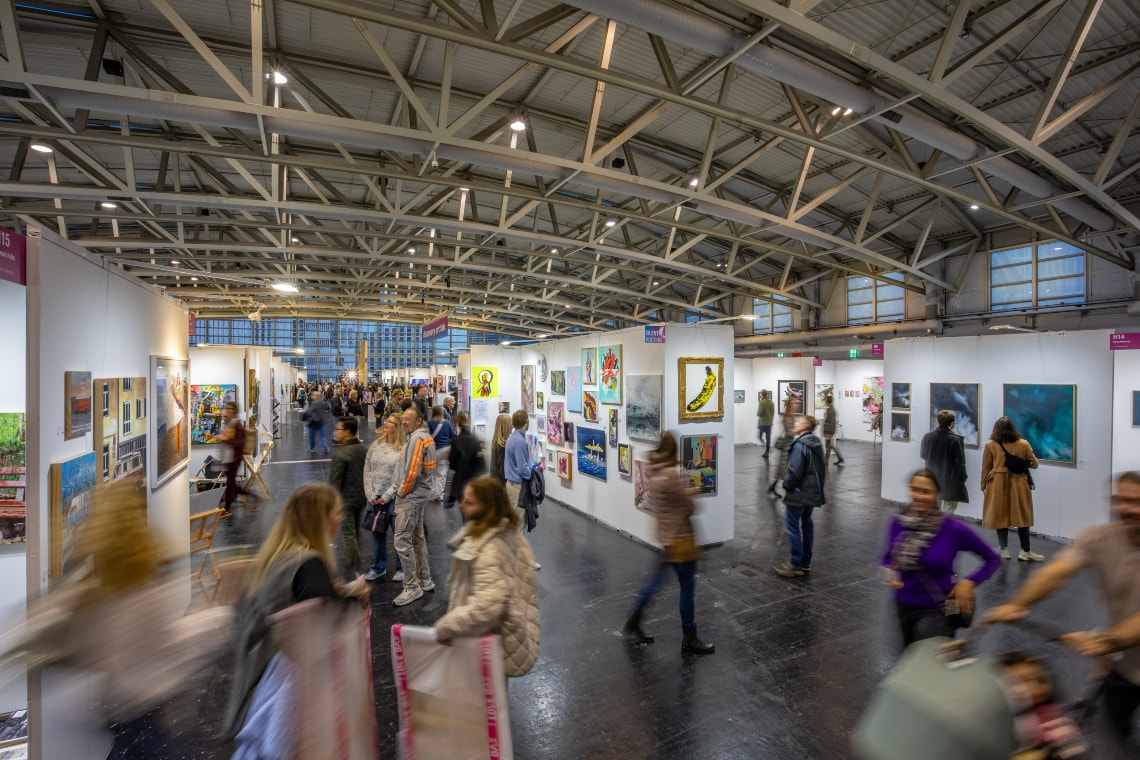
DAF Frankfurt 2026
Figurative vs Abstract: The Numbers at DAF Frankfurt
The floor plan backs them both. Of the gallery booths, 63% led with figurative work, 90% showed at least some, and only 10% were purely abstract. Even the abstract galleries mostly hedged, hanging a figurative piece or two alongside. The artists’ section was more evenly split, at roughly 57% figurative to 43% abstract, which is telling in itself: artists are still making abstraction, but galleries, who have to sell, are betting on the figure.
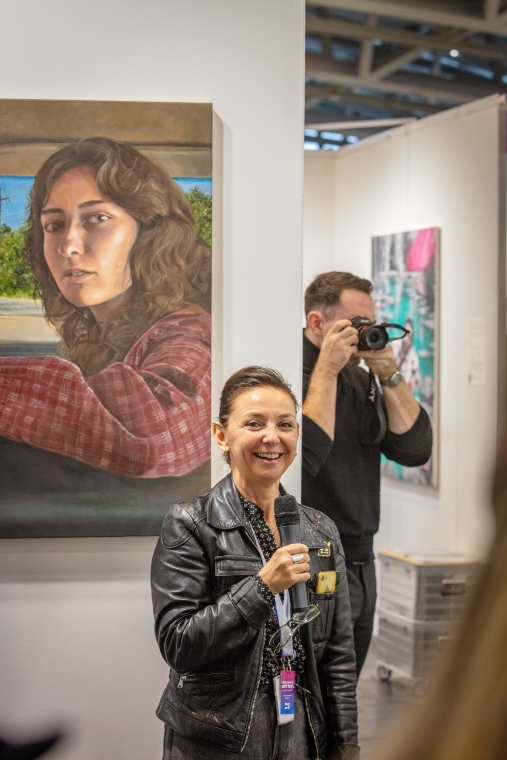
Barbara Fragogna guiding a tour at DAF Frankfurt 2026
Old Master Techniques, Contemporary Subjects
Some of the strongest work reaches furthest back. Carl Dobsky (Gallery Poulsen) stages an expulsion from Eden in Caravaggio’s chiaroscuro, complete with sleep masks and a suitcase. ANJUTA paints a Dutch vanitas in which a smartwatch replaces the hourglass. Christoph Eberle (VERMEER Magazine) sets lilies against a jerrycan on the black ground of a Rachel Ruysch flower piece, while Gan-Erdene Tsend (Galerie am Dom) borrows Caspar David Friedrich’s figure seen from behind, then lets a puddle reflect a man who isn’t on the bridge. Eberle and Tsend are both Discover a Talent winners.
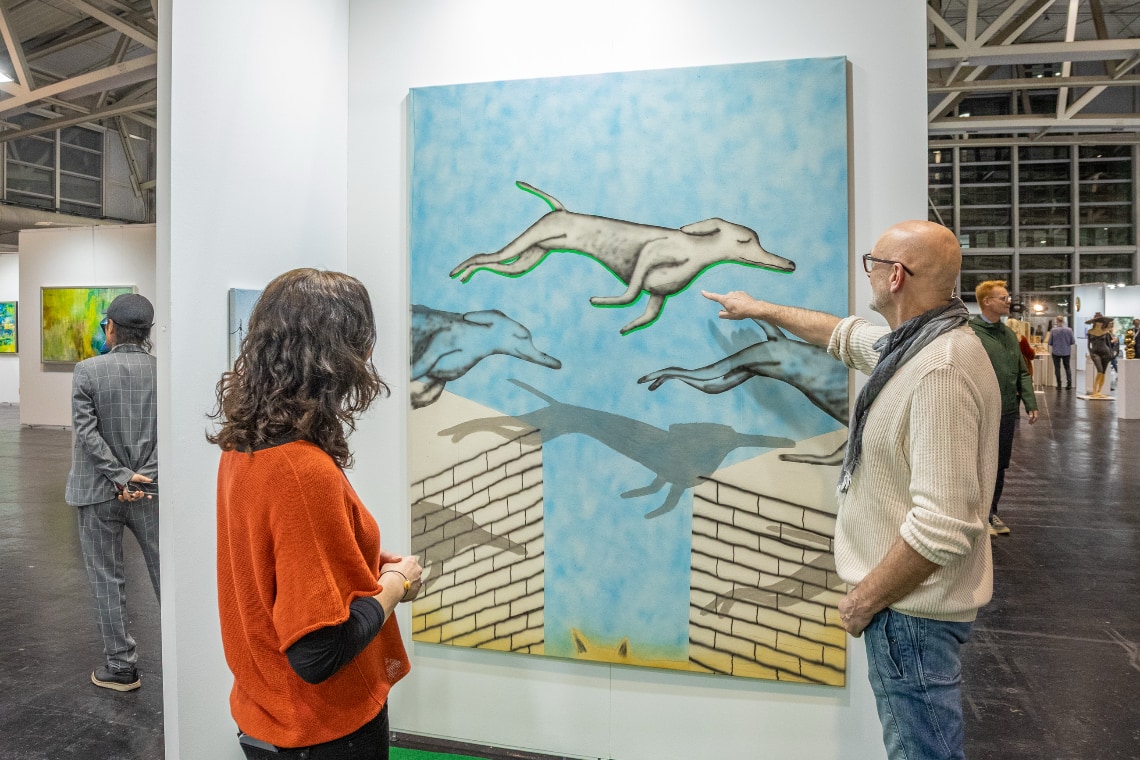
Kai Brückner and Klaudia Kelleh at Discover a talent booth
Painting Is Back
Painting is back as the preferred medium, oil on canvas, figure and all. If 2026 has a mood, it’s the pleasure of recognition: enjoying what we know and connecting to what we see.
Follow DAF Frankfurt to see where the figure leads next, and join us at the next edition.